
Coventry’s municipal companies returned £1.243m in 2024/25 — how does that compare with the original promise?
Status: Findings published — business-case and long-term return review continuing
Coventry Municipal Holdings reported a £1.243 million return to the council in 2024/25. The group also reported a £2.784 million after-tax loss, positive cash generation and a much lower fair value than original acquisition cost. Residents need one account that compares the original promise with the full return, risk and public benefit.
The Coventry impact
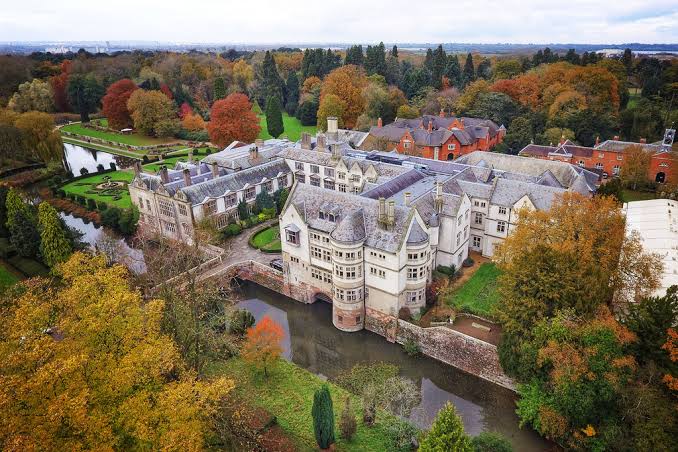
Coventry residents ultimately own these interests and rely on the assets and services involved, from Coombe Abbey’s heritage to waste operations. The test is whether the council can show what they have delivered over time.
What we found
Coventry Municipal Holdings includes Coombe Abbey Park Ltd, Tom White Waste Ltd and smaller subsidiaries. Its public annual performance report for the year ending 31 March 2025 records a £1.243 million return to the shareholder — Coventry City Council — during 2024/25.
The council’s accompanying report identifies £0.8 million in rent and £0.4 million in loan interest received from the group in 2024/25. Those are real returns. A headline asking “where is the return?” without acknowledging them would be unfair.
The wider financial picture is mixed. CMH reported £34.299 million of group income in 2024/25, a £2.784 million loss after tax and £2.142 million of “cash generated profit”, defined in the report as earnings before interest, tax, depreciation and amortisation. Each measure answers a different question.
Coombe Abbey Park group revenue was £11.3 million in 2024/25. Revenue is not profit, cash available to the council or proof that the acquisition met its business case.
The council also said external valuation advice put the fair value of its CMH shareholding at £6.1 million in March 2025, compared with original acquisition costs of £24.1 million and £9.6 million in the prior year. This is an accounting valuation of the group interest, not a sale price for Coombe Abbey and not the whole public return.
At the 2025/26 council outturn, no dividend had been declared for that year by Tom White Waste or Coombe Abbey Park. A year without a dividend does not mean no return: rent, loan interest, repayments, asset stewardship and public benefit must also be counted.
Why it matters
Commercial companies expose public assets to commercial risks. They can also protect heritage, provide services and generate income. Residents need both sides of that ledger.
The concern is not that every investment must pay an immediate dividend. It is that public reporting still makes it difficult to compare the original forecast, later support, current value and total return in one place. Scattered figures invite either blind defence or careless attack.
What the evidence does and does not show
A clean audit opinion tests whether accounts are properly prepared; it does not prove that an acquisition achieved its business case. Revenue is not profit. EBITDA-style cash generation is not free cash, a dividend or cash received by the council. Fair value is not the same as original cost or a guaranteed market price.
The council’s strongest explanation is that these are long-term strategic assets with public benefits as well as financial returns. Coombe Abbey also carries the costs of a Grade I listed building. Those benefits and costs must be defined and measured.
The unanswered questions
The council and CMH hold the original company-level business cases, forecast returns, downside assumptions and review triggers. Those records are needed to compare promise with performance.
Residents also need a year-by-year schedule of share capital, loans, interest, rent, repayments, additional capital, guarantees, dividends and valuation changes, separated between Coombe Abbey Park, Tom White Waste and the consolidated group.
For public value, the missing measures include the cost of maintaining the heritage asset, visitor and community benefit, service performance, environmental outcomes and the financial value assigned to those objectives.
Our verdict
There was a public return in 2024/25, and it must be acknowledged. There was also a group loss after tax and a substantial fall in the reported fair value of the council’s shareholding against original acquisition cost. Neither figure settles the argument alone. Coventry needs one transparent account that tests financial and public-value outcomes against the original business cases. Commercial sensitivity can protect live negotiations; it cannot become a permanent curtain around performance.
What we are doing about it
We are assembling the published annual reports, accounts, outturns, shareholder papers, loan returns, rent and valuations into a single chronology.
Where the original assumptions or company-level figures are absent, we will make targeted requests for the relevant business case, forecast return, capital and loan history, performance measures and review decisions. We will report rent, interest, dividends, profit, cash generation and valuation separately.
Evidence and status
Status: Findings published; long-term return review continuing.
Last updated: 6 August 2026.
Primary sources: CMH Annual Performance Report 2024/25; CMH performance appendix; Coventry 2025/26 Revenue and Capital Outturn; January 2025 Commercial Investments briefing.
FOI references: None claimed. Targeted requests will be referenced when filed.
Next expected evidence: Audited 2025/26 company accounts and the next CMH annual performance report; publication dates are not yet known.