
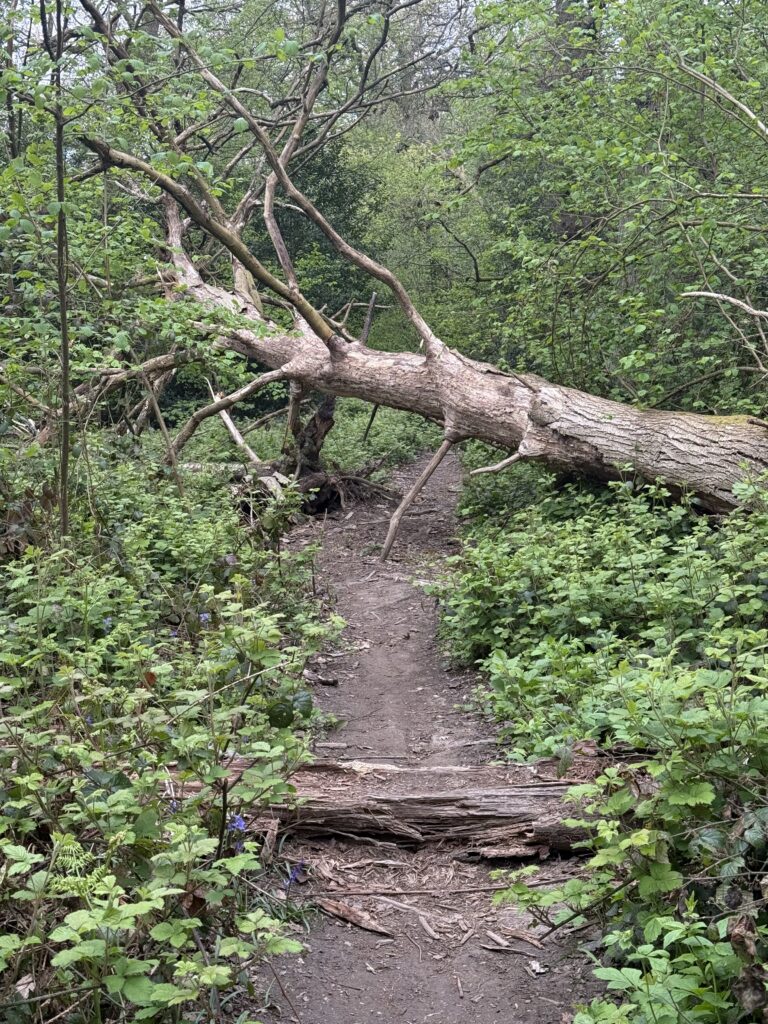
Residents Demanded Safe Woodland Paths. We Would Not Accept a Vague Answer.
Status: Formal council process continuing
Ten Shilling Wood and Park Wood should be safe and accessible to families, children, older residents, dog walkers and people using wheelchairs, mobility aids or pushchairs.
Our petition called on Coventry City Council to clear fallen trees and overgrowth, repair damaged infrastructure, restore accessible routes and introduce a proper maintenance plan.
It was submitted on 16 April 2026 and closed on 11 June with 50 signatures.
The council subsequently stated that main paths had been cleared, minor bridge repairs would be undertaken and vegetation would be cut back along the designated accessible route.
Some work has taken place. That should be recognised.
But it does not resolve every issue raised.
We have requested firm completion dates, a proper response concerning the damaged bridge and a map showing official paths, designated accessible routes, informal trails and any routes the council intends to keep obstructed to discourage illegal e-bike use.
Not every informal trail must be cleared. Some areas may need to remain undisturbed for biodiversity and woodland management.
But official routes—particularly designated accessible routes—must be clearly identified and properly maintained.
Branches and barriers must not obstruct legitimate access for wheelchair users, people with limited mobility or families with pushchairs.
Illegal e-bike use should be addressed through proportionate enforcement, signage and properly designed access measures—not by making public woodland inaccessible to responsible residents.
Because the initial response did not fully determine the petition, the matter is due to go before the Cabinet Member for City Services at the Council House on 15 September 2026.
This case also raises a wider question. Coventry says it manages an estimated 200,000 woodland trees. Residents should not need a separate petition every time a bridge deteriorates or an accessible path becomes obstructed.
From one petition to a citywide standard
Coventry’s own green-space and urban-forestry strategies recognise the importance of management planning, accessibility and community involvement.
The problem is turning those principles into a service residents can see and test.
A citywide approach should identify which woodlands are council-managed, which routes are official and what maintenance standard applies to each type of path. It should also explain which areas are intentionally left natural for habitat protection.
That clarity would prevent three different issues from being confused:
- legitimate ecological management;
- informal routes that were never intended to be maintained; and
- official paths or structures that have deteriorated through neglect.
Residents also need a straightforward reporting route. When a fallen tree, damaged bridge or accessibility obstruction is reported, the council should issue a reference, assess the risk and provide a target date.
Volunteer and Friends groups can strengthen inspections, conservation and local knowledge, but they must not become a substitute for the council’s responsibility to maintain public infrastructure.
The lesson from Ten Shilling Wood and Park Wood is not that every woodland must be manicured. It is that residents should be told honestly which routes are maintained, which are accessible and when necessary repairs will be completed.
What happens next
The petition will continue through the formal council process. We will seek firm dates for the bridge and remaining vegetation work, the requested route map and a written maintenance commitment.
Alongside that case, we will press for the same basic information to be available for other council-managed woodlands. The proposed Friends group will be developed as a constructive way for residents to report conditions, support conservation and maintain an evidence trail.
Progress will be judged by completed work—not promises recorded in another meeting paper.
The same standard should apply across Coventry: clear routes, clear responsibilities, published deadlines and a maintenance system residents can understand.
Our verdict
Vague assurances that work “will take place” are not a substitute for completion dates, named responsibility and visible results.
Accessibility is not an optional improvement. Where a route is designated as accessible, residents must be able to depend upon it remaining accessible.
Woodlands must also be managed in a way that protects biodiversity. These objectives are not incompatible.
A competent woodland policy can protect nature, maintain public routes and improve accessibility at the same time.
Restore Britain Coventry’s local plan for every council-managed woodland
Publish a citywide map. Show official paths, accessible routes, entrances, bridges, ownership boundaries, closures and areas managed primarily for biodiversity.
Audit accessibility. Inspect designated routes with disabled residents and relevant organisations, then publish defects and completion dates.
Set repair standards. Reported hazards, fallen trees and damaged structures should be inspected, prioritised and assigned a recorded completion date.
Maintain—not react. Every major woodland should have scheduled inspections and a published annual maintenance programme.
Protect legitimate access. Measures targeting illegal e-bikes must not exclude wheelchair users, mobility scooters or pushchairs from official routes.
Give residents a permanent voice. Support Friends groups for major woodlands, beginning with Ten Shilling Wood and Park Wood, with a named council contact.
Coventry residents already pay for these public spaces.
They should not have to fight repeatedly for the right to use them.
We will report the Cabinet Member’s decision and track every resulting commitment through to completion.
Local policy notice: These proposals are local campaign priorities of Restore Britain Coventry. They are not adopted national Restore Britain policy unless expressly stated.
Sources: Coventry Urban Forestry Strategy 2022–2032 and the Ten Shilling Wood and Park Wood petition correspondence.